
Whitening toothpaste can improve the appearance of your smile mainly by removing external surface stains. Not every change in tooth colour is on the surface, and not every toothpaste works in the same way. Choosing a suitable product means understanding the difference between cleaning, removing stains and chemically bleaching teeth.
How does whitening toothpaste work?
Most whitening toothpastes intended for everyday use contain cleaning and polishing ingredients that help remove deposits from coffee, tea, red wine, spices or tobacco. Some formulas also contain enzymes, ingredients that bind stains, or components that change how tooth colour appears optically.
Toothpaste does not necessarily change the natural colour of enamel. If your teeth have a warm shade because of the structure of their enamel and dentine, the effect will be limited. Internal discolouration caused by medication, injury or root-canal treatment may also require diagnosis and treatment selected by a dentist.
Whitening toothpaste versus professional whitening
Professional bleaching uses substances that penetrate the tooth structure and oxidise coloured compounds. Toothpaste usually acts on the surface. This is why it can improve the appearance of stained teeth without producing the same result as an in-office whitening treatment.
| Feature | Whitening toothpaste | Professional whitening |
|---|---|---|
| Main action | Removing surface stains | Changing coloured compounds within the tooth structure |
| Speed | Gradual | Depends on the method; usually faster |
| Extent of the effect | Subtle to moderate | Usually more noticeable |
| Selection | Independently or after a consultation | After a dental assessment |
Which stains can toothpaste remove?
External stains, meaning deposits on the enamel surface, tend to respond best. They can develop because of:
- coffee and black tea,
- red wine,
- cola drinks,
- strongly coloured spices and sauces,
- cigarette smoking,
- incomplete plaque removal.
Hard yellowish or brown deposits near the gums may be tartar. Toothpaste will not dissolve it; professional dental cleaning is needed.
Activated charcoal in toothpaste: what should you know?
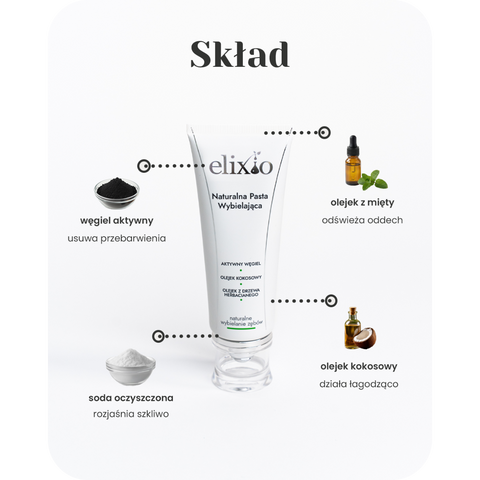
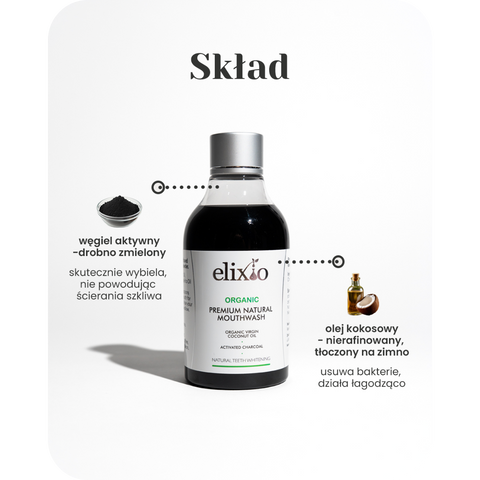
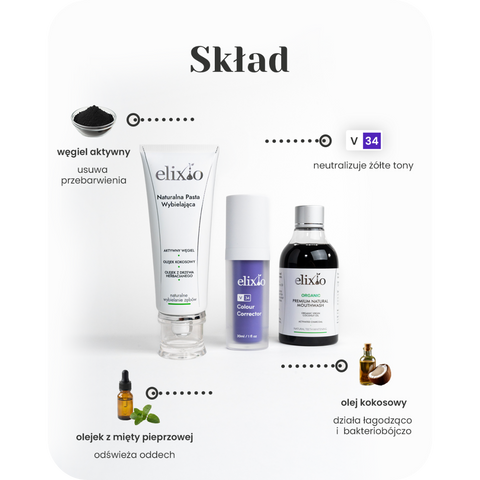
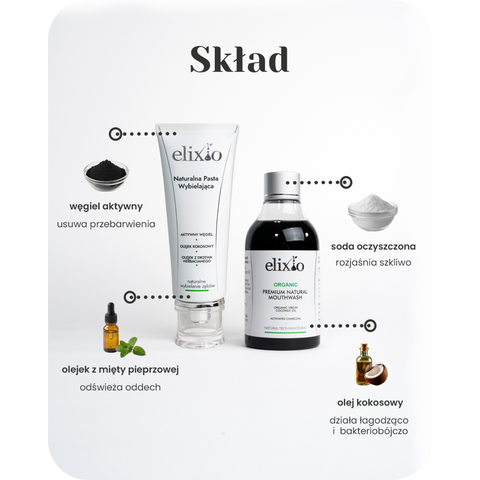
Activated charcoal has a large surface area and is associated with the ability to adsorb various molecules. In toothpaste, it also forms part of the cleaning system. However, performance and safety depend on the complete formula, particle size, abrasivity and how the product is used, rather than on the presence of charcoal alone.
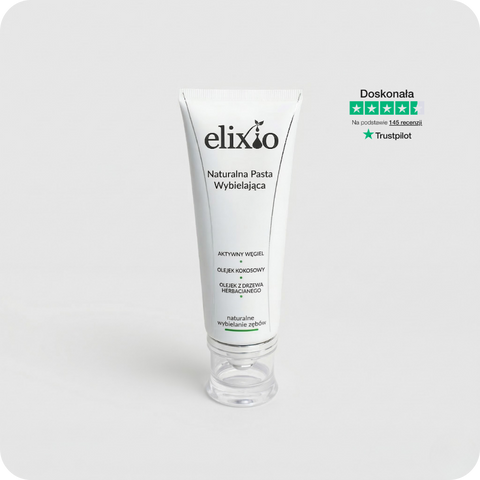
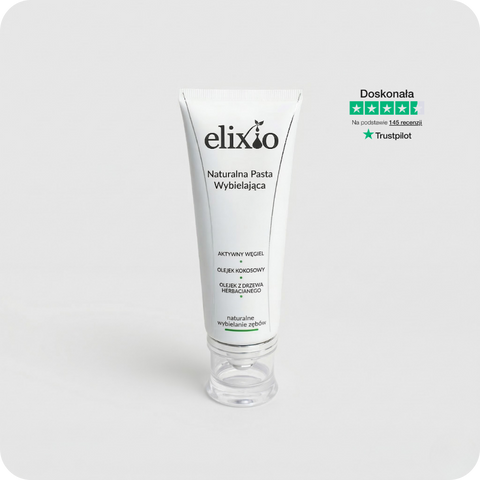
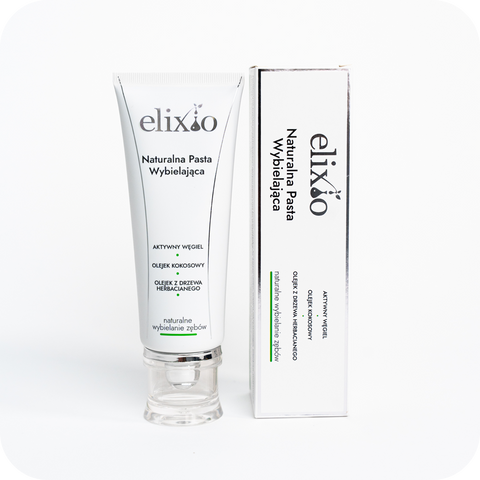
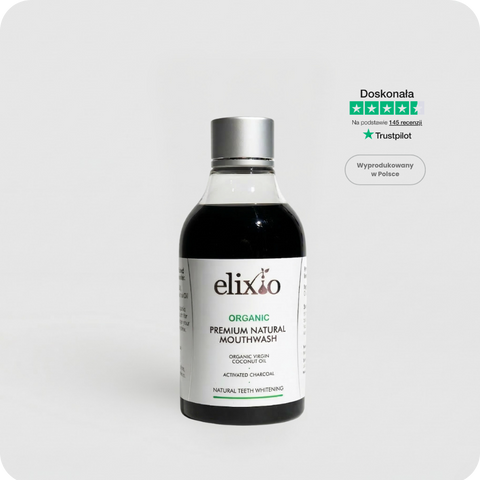
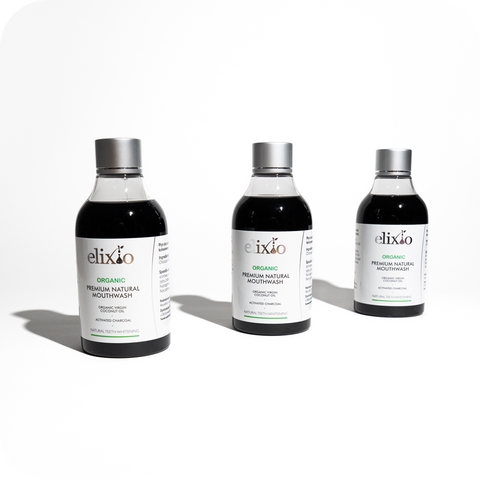
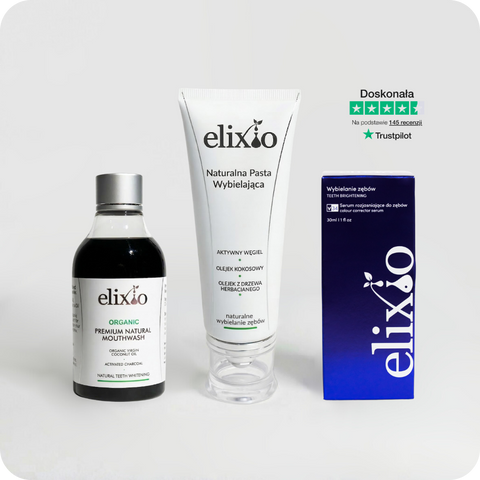
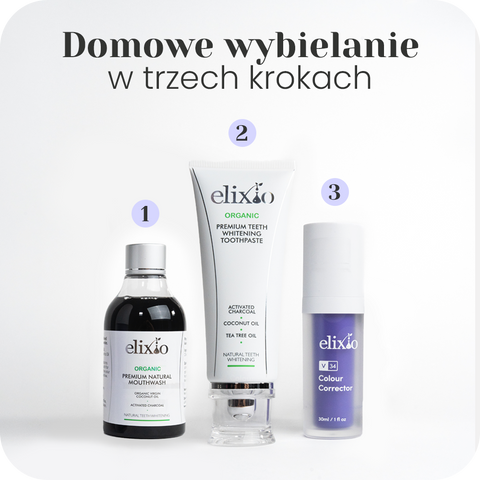
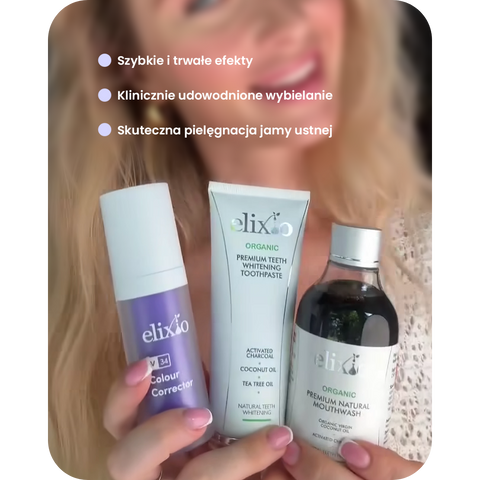
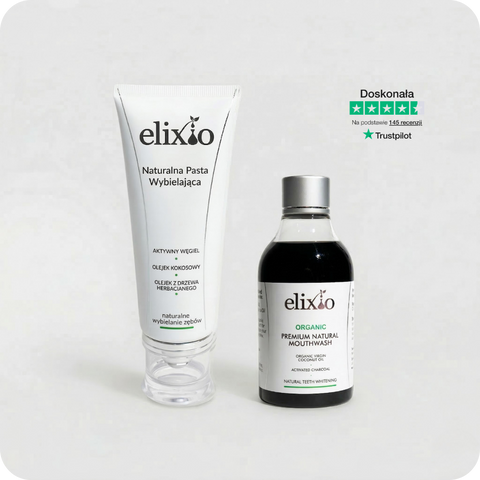
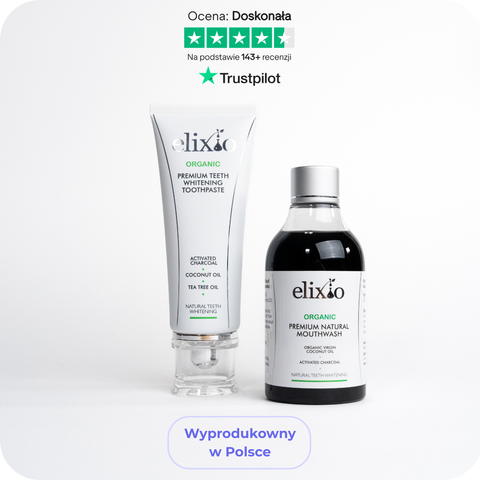
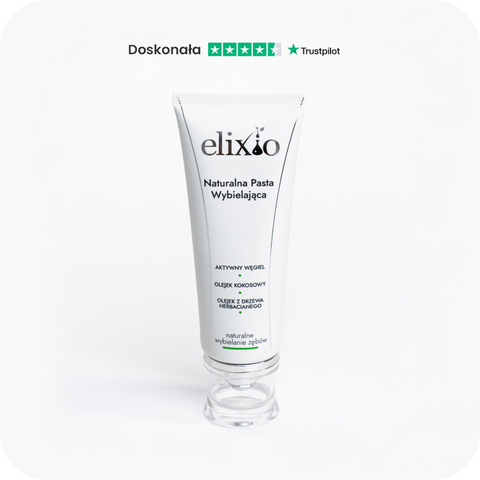
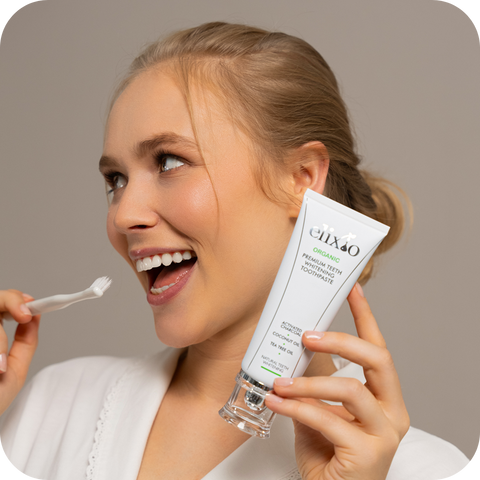
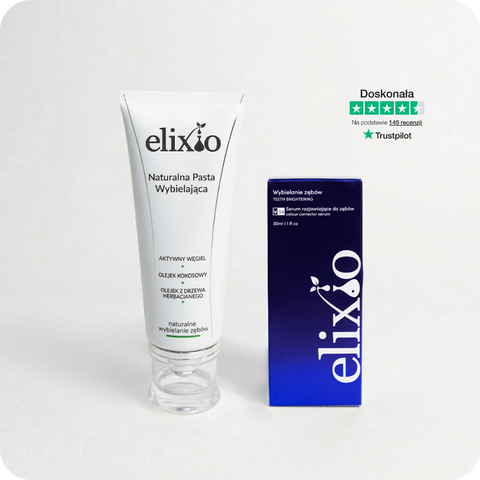
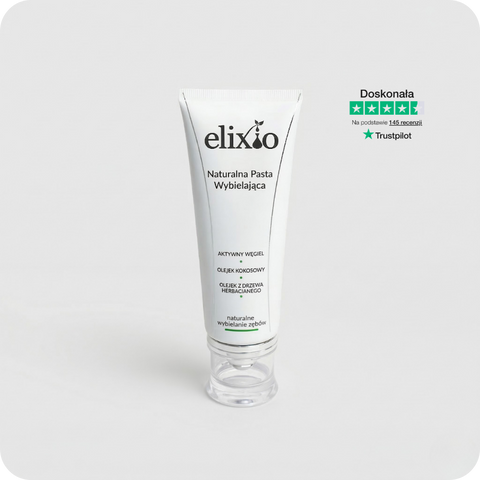
Elixio activated charcoal whitening toothpaste is designed for regular oral hygiene and surface-stain care. Do not additionally rub loose charcoal powder into your teeth: homemade mixtures have uncontrolled abrasivity.
Can whitening toothpaste damage enamel?
A properly formulated toothpaste used according to its instructions should not automatically damage healthy enamel. Risk increases with excessive pressure, a hard toothbrush, overly frequent brushing, homemade powders or existing acid erosion. For more detail, read whether whitening toothpaste can damage enamel.
If you have sensitivity, exposed tooth necks or pain, stop experimenting and seek advice about a suitable product.
How do you choose a suitable whitening toothpaste?
- Identify the problem. Is it coffee staining, your natural tooth shade, a single dark spot or tartar?
- Check the intended use. A toothpaste for daily use should have clear instructions and a complete ingredient list.
- Consider sensitivity. Brushing harder will not safely speed up the effect.
- Assess protection against tooth decay. The label “whitening” does not tell you whether the product contains active ingredients that help protect against cavities.
- Do not choose by toothpaste colour alone. Black or purple colouring does not guarantee a stronger effect.
How should you use whitening toothpaste?
The safest approach is to follow the information on the packaging. A standard brushing routine includes:
- a soft toothbrush,
- a small amount of toothpaste,
- about two minutes of brushing,
- gentle pressure,
- thorough cleaning of all tooth surfaces,
- consistency rather than aggressive scrubbing.
Assess the result after several weeks in similar lighting. Comparing your teeth every day can be misleading, and photographs taken with different white-balance settings are not reliable comparisons.
How long should you use whitening toothpaste?
There is no single answer for every formula. Some products are intended for everyday use, while others are designed for shorter courses. The manufacturer's directions take priority. For more detail, read how long to use whitening toothpaste.
Whitening toothpaste and V34
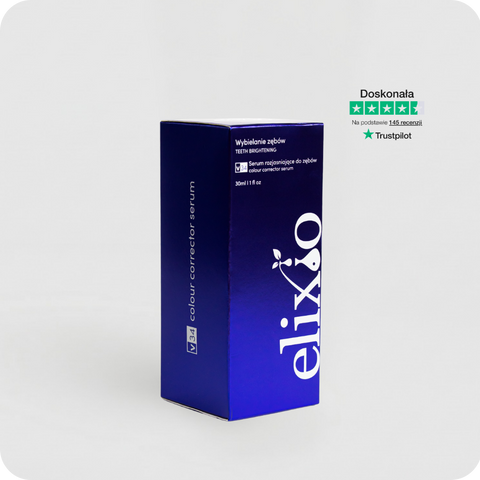
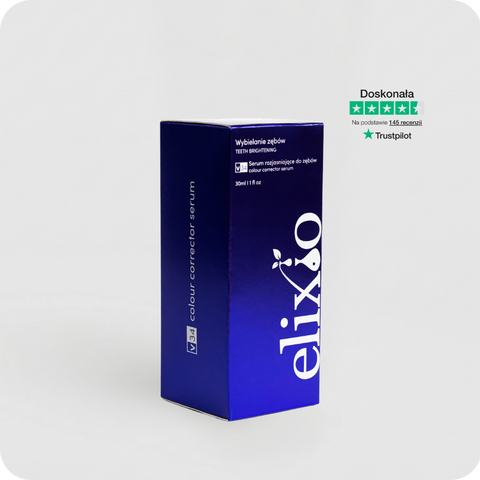
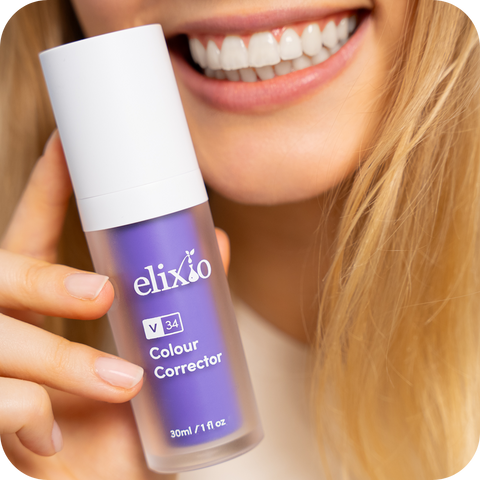
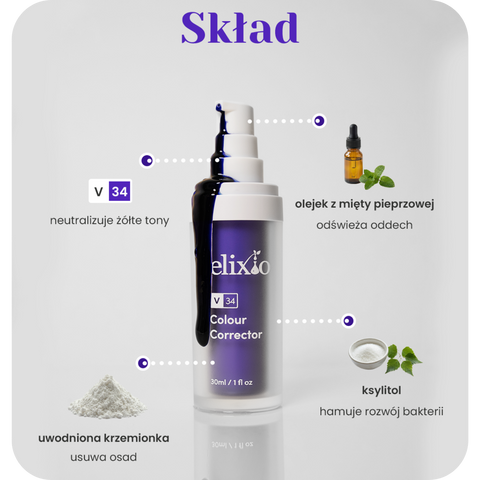
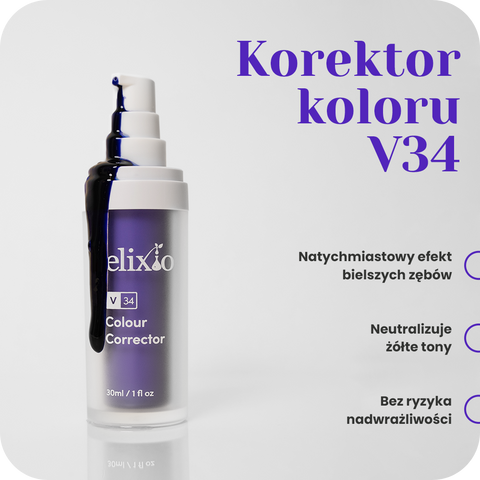
Toothpaste helps remove stains during regular brushing. A purple V34 colour corrector produces a temporary optical effect by counteracting yellow tones. These products can complement each other, but they are not interchangeable. Read how V34 teeth colour corrector works and what results to expect.
When should you visit a dentist?
- one tooth has suddenly become darker,
- white, brown or black marks appear,
- you experience pain or pronounced sensitivity,
- your gums bleed or are swollen,
- the results of your home routine are uneven,
- you are considering stronger whitening.
Before bleaching, cavities should be treated and tartar removed. Fillings, crowns and veneers do not whiten like natural teeth, so their shade may need to be matched after treatment.
How can you assess results without misleading yourself?
Take a photograph before you start using the product, in daylight, without a filter and with the same camera settings. Repeat it after several weeks. Avoid comparing your smile against different lipstick colours, clothing or lighting, as these affect how white teeth appear.
If stains return quickly, consider how often you drink coffee and tea, whether you smoke, whether you have a dry mouth, and your brushing technique. Changing toothpaste without adjusting your habits may produce only a short-lived improvement.
Can you use whitening toothpaste after professional dental cleaning?
Teeth may be temporarily sensitive after professional removal of tartar and stains. Your dentist or dental hygienist may recommend a gentler toothpaste for a few days. Once the tissues have settled, a toothpaste for surface-stain care can be introduced according to professional advice and the manufacturer's directions. Do not brush aggressively to “maintain” the result of the cleaning.
FAQ
What is the best whitening toothpaste?
The best choice depends on the type of stain, the condition of your enamel and your risk of tooth decay. No single product is suitable for everyone.
Does whitening toothpaste work on yellow teeth?
It may help if the yellow appearance is caused by surface stains. It has a more limited effect on the natural colour of dentine showing through enamel.
Can you use it with braces?
Fixed braces can make cleaning uneven. First focus on a thorough technique and discuss your choice of product with your orthodontist or dental hygienist.
Does toothpaste whiten fillings?
It does not change the colour of composite materials. It may only remove some surface stains.
How long does it take to see a result?
This depends on the type of discolouration, consistent use and the formula. Surface stains may improve gradually; deeper discolouration will not respond to toothpaste alone.
Summary
Whitening toothpaste is primarily a tool for regular surface-stain removal and maintaining a clean appearance. Correctly identifying the problem, using a gentle technique and keeping realistic expectations are key. Deep or isolated discolouration, or discolouration accompanied by pain, needs a dental assessment.
Sources and further reading
- American Dental Association: Whitening
- American Dental Association: Toothpastes
- American Dental Association: Home Oral Care
This article is educational and does not replace an individual dental assessment or advice.